New Passions After 30: A 4-Step Method That Works
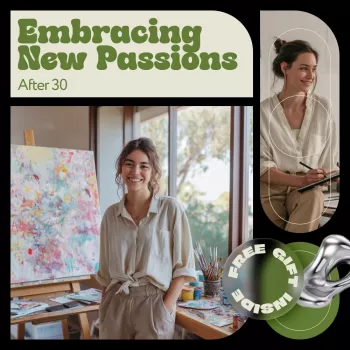
Embracing New Passions After 30: A Practical Path to Self-Discovery and Fresh Ideas
New interests can feel harder to start after 30—not because curiosity disappears, but because time, confidence, and routines become more complex. The good news: a simple, structured approach makes it easier to explore creativity, test new skills, and build momentum without turning it into another stressful “life overhaul.” Instead of waiting for the perfect spark, you can set up small experiments that reveal what actually fits your current life.
Why new passions can feel different after 30 (and why that’s useful)
After 30, passion-hunting gets more honest—and that’s an advantage. Your schedule is real, your standards are clearer, and your identity has more layers than it did a decade ago.
- Responsibilities increase, so interests need to fit real schedules rather than ideal ones. A hobby that works in 20-minute blocks often wins over a “someday” dream that needs three free hours.
- Past experiences sharpen your taste. It becomes easier to notice what’s genuinely energizing versus what only looks “productive” on paper.
- Being a beginner can feel riskier. Reframing beginnerhood as data collection (“Is this a fit?”) reduces pressure and keeps you moving.
- Identity is more layered (career, family, community). Many passions work best as supportive parallel tracks—something that adds depth, not something that replaces everything else.
If you want a calm, repeatable way to explore, a workbook-style guide like the Embracing New Passions After 30 eBook can help turn vague curiosity into small, doable next steps.
A practical reset: the 4-stage method (notice, choose, test, build)
Think of this as a low-drama system. You’re not trying to “find your one true calling” in a weekend—you’re running small trials until something clicks.
4-stage method with simple actions
| Stage | Goal | Examples of actions (15–30 minutes) |
|---|---|---|
| Notice | Spot genuine sparks | List 10 “curiosity moments”; save 3 references (video, article, photo); write 3 questions you want answered |
| Choose | Pick one direction | Select one theme; define one measurable mini-goal; choose a time slot (2x/week) |
| Test | Try without pressure | Do one beginner tutorial; borrow/rent before buying; join one low-commitment class or community |
| Build | Make it stick | Create a weekly ritual; track progress in a simple log; plan the next micro-step (slightly harder) |
This method also protects your energy: you’re choosing a theme for now, not declaring a new identity. The goal is to keep what works and drop what doesn’t—without guilt.
Self-discovery prompts that unlock better ideas
- Energy audit: Note which activities leave you calmer, more focused, or more social. Energy is often a better compass than “talent.”
- Values match: Does this interest support autonomy, mastery, connection, contribution, or play? If it matches your values, it’s easier to repeat.
- Childhood clue check: Revisit what felt absorbing before grades, jobs, or expectations shaped your choices. Often there’s a thread worth testing again.
- Constraint-based creativity: Design a passion that fits your life (budget cap, time cap, space cap) rather than fighting constraints. A “small-space hobby” can still be deeply satisfying.
Research consistently connects leisure activities with better well-being, stress buffering, and overall life satisfaction. For deeper context, see the American Psychological Association’s overview of leisure benefits (APA) and general guidance on healthy habits from Harvard Health Publishing.
Fresh ideas to explore (without a big time or money commitment)
Pick ideas that are easy to start, easy to pause, and easy to restart. These categories are designed for quick wins.
- Creative: collage journaling, phone photography challenges, beginner watercolor, creative writing sprints.
- Hands-on: bread baking, plant propagation, simple woodworking kits, visible mending, candle making.
- Mind-body: dance fundamentals at home, mobility flows, hiking “micro-adventures,” beginner yoga or tai chi.
- Social: board game cafés, volunteer skill-based roles, language exchange meetups, community theater backstage.
- Intellectual: local history projects, citizen science apps, public lectures, nonfiction “topic sprints” (2 weeks per topic).
If you’re building a reading or journaling corner to support a calmer creative routine, the Nordic rattan leisure single sofa chair can make those short sessions feel like a genuine ritual—without needing a full room makeover.
Turning a new interest into a habit (without burning out)
For outdoor-focused micro-adventures, having a comfortable base can help you actually use your time off instead of overplanning it. If family time is part of your “passion plan,” consider a setup like the living room outdoor family shelter tent to make low-effort outings more doable.
Common blockers and quick fixes
A guided companion for the process
If you want a ready-made framework, the Embracing New Passions After 30 eBook is designed around prompts and repeatable templates so you can generate fresh ideas, test them quickly, and keep what truly fits.
FAQ
How do you find a new passion after 30 if nothing feels exciting?
Start with low-stakes experiments and track “curiosity moments” for a week, then choose one small theme to test within clear time and budget constraints. Excitement often shows up after action creates momentum, not before.
How long should you try a new hobby before deciding it’s not for you?
A solid test window is 2–4 weeks with 4–8 sessions. Evaluate whether it improves your energy, whether you’re willing to repeat it, and whether you notice even small skill gains—while allowing for normal beginner discomfort.
What if you feel guilty spending time on yourself?
Treat hobbies as mental health maintenance and identity balance, not indulgence. Keep sessions small and scheduled, and communicate clear boundaries so your time supports you without creating tension at home.















Leave a comment