V Smart Air Fryer Oven (220V): Crispy, Fast, Less Mess
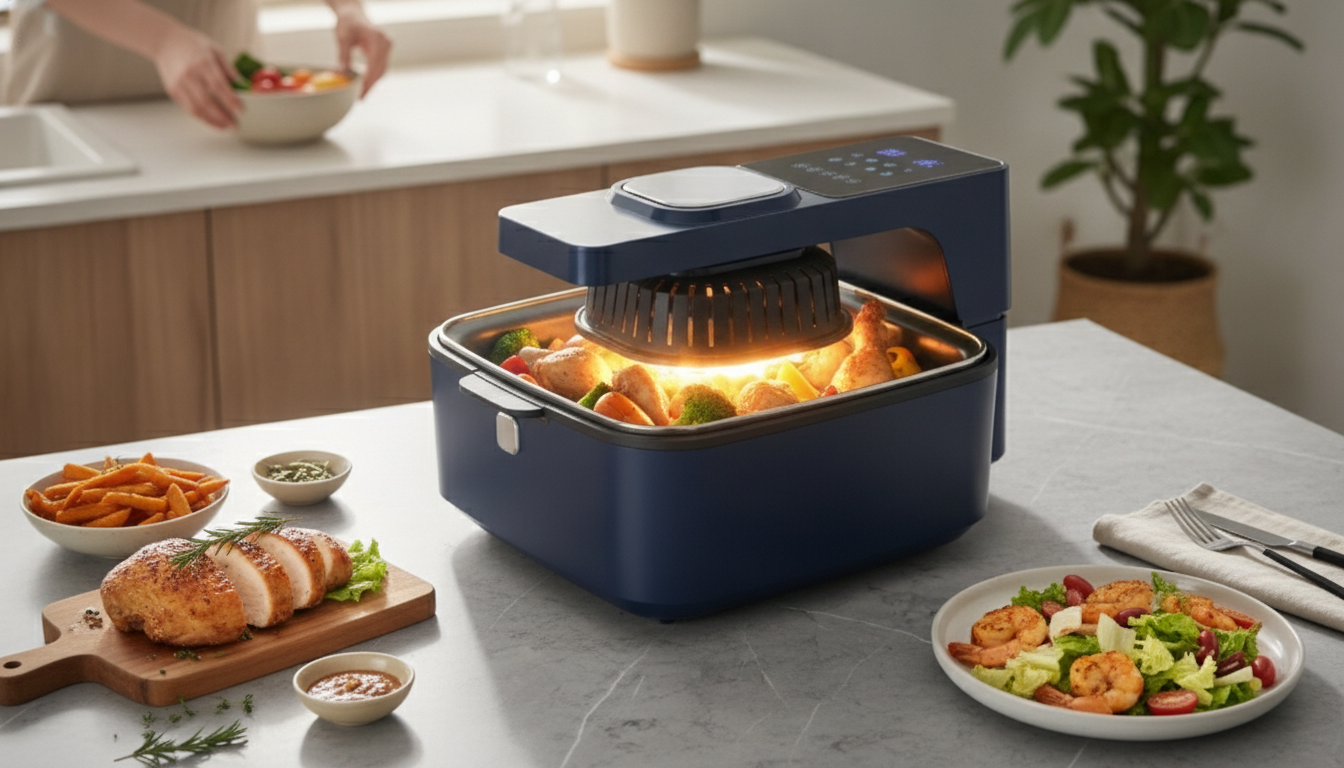
V Smart Air Fryer Oven: Smart Cooking, Crispy Results, Less Counter Clutter
A smart air fryer oven combines fast air circulation with oven-style capacity for crisping, roasting, baking, and reheating in one appliance. The payoff is simple: quicker weekday cooking, better browning than a microwave reheat, and fewer separate gadgets competing for space. Below is a practical guide to what matters most—power requirements, key functions, capacity, controls, and everyday performance—plus tips for getting consistent results from a 220V smart air fryer oven.
What a Smart Air Fryer Oven Does Differently
An air fryer oven is essentially a compact convection oven tuned for high-speed airflow. That airflow helps drive browning and crisping with far less oil than deep frying, while still keeping the convenience of oven-style trays and racks.
- Convection-style airflow encourages even browning and a crisp surface on fries, wings, and breaded foods.
- Oven form factor typically includes trays or multiple racks, so larger cuts and multi-item meals are more realistic than in basket-only models.
- Smart controls (presets, precise timers, temperature settings, and sometimes app monitoring) reduce guesswork for repeatable meals.
- Everyday uses include fries and wings, roasted vegetables, reheating pizza, toasting, small-batch baking, and finishing frozen foods quickly.
Quick Specs Snapshot: 220V Smart Air Fryer Oven
A 220V unit is built for regions with 220–240V mains power. Before buying, confirm your outlet type and local electrical standards so the appliance runs safely and reaches full temperature as intended.
- Designed for 220V power systems; verify compatibility before purchase.
- Great for kitchens that want crisping + oven tasks without firing up a full-size oven.
- Ideal for routine meals where fast preheat and consistent browning matter.
At-a-Glance Checklist Before Buying
| What to Check | Why It Matters | What to Do |
|---|---|---|
| Voltage (220V) | Prevents incompatibility, poor performance, or damage | Match the appliance voltage to your country’s standard and outlet |
| Capacity and rack layout | Determines portion size and whether multi-level cooking is practical | Measure counter space and confirm internal height for your usual dishes |
| Temperature range and control precision | Helps with baking, dehydration, and crisping consistency | Choose a unit that supports your most common recipes |
| Cleaning design | Affects how often it gets used | Look for removable trays/racks and nonstick or easy-wipe interior surfaces |
| Noise and airflow direction | Impacts comfort and countertop placement | Leave clearance around vents and avoid pushing the unit against walls |
Everyday Cooking Results: What to Expect
Performance is mostly about airflow, spacing, and timing. With the right setup, an air fryer oven can deliver the “crunch outside” texture people chase—without turning dinner into a deep-frying project.
- Crispiness: Strong airflow can produce crunchy surfaces on fries, breaded foods, and chicken skin—especially with a light oil mist and good spacing.
- Speed: Often faster than a conventional oven for weeknight meals thanks to shorter preheat and concentrated heat.
- Moisture control: Great for browning, but delicate foods can dry out; use a slightly lower temperature or shorten cook time.
- Batch strategy: For best texture, cook in a single layer when possible; if using multiple racks, rotate positions mid-cook for even color.
Smart Features That Actually Help
Not every “smart” feature changes dinner for the better. The most useful ones are the ones that remove friction—clear presets, accurate controls, and reminders that prevent uneven cooking.
- Useful presets: Fries, poultry, vegetables, bake, reheat, toast, and sometimes dehydrate (varies by model).
- Reliable time/temp settings: Precision reduces trial-and-error and makes weekday meals more repeatable.
- Shake/turn prompts: Simple reminders improve browning on wings, fries, and roasted vegetables.
- App monitoring (if included): Convenient for checking progress, but the biggest value still comes from stable heating, good airflow, and easy cleanup.
220V Power Notes and Safe Setup
Air fryer ovens can draw significant wattage, so safe setup matters as much as cooking performance. Use a properly grounded outlet, and avoid plugging other high-wattage appliances into the same circuit.
- Use a grounded outlet and avoid overloading the circuit with kettles, microwaves, or space heaters.
- Avoid cheap travel converters; if a transformer is needed in your area, confirm it’s rated for the appliance’s wattage and continuous use.
- Follow the manual for ventilation clearance to prevent heat buildup and protect cabinets.
- Place on a stable, heat-resistant surface, and keep the cord away from hot or wet areas.
For broader kitchen safety habits, see guidance from the NFPA on home cooking fire safety.
Capacity, Accessories, and Counter Space Planning
Cleaning and Maintenance Habits That Keep Performance High
For best practices on cleaning food-contact surfaces, reference the U.S. FDA guidance on cleaning and sanitizing. For energy-saving habits in the kitchen, see ENERGY STAR tips on appliance energy use.
Recommended Options In Stock
- 220V Smart Air Fryer Oven (In Stock) — Price: $412.51
- Elegant Art Deco-Inspired Crystal Branch Chandelier for Dining Room (In Stock) — Price: $1411.99
- Nordic Rattan Leisure Single Sofa Chair – Solid Wood, Modern Fabric Design (In Stock) — Price: $1431.99
FAQ
Is a 220V smart air fryer oven safe to use on 110V power?
Voltage needs to match the appliance rating. A 220V unit on 110V typically won’t heat correctly, and improper adapters can create safety risks; only use a properly rated transformer (if truly required) and a grounded setup.
What foods turn out best in an air fryer oven compared to a basket air fryer?
Air fryer ovens excel at multi-rack cooking, larger items, and toast/bake-style tasks like pizza slices, open-faced melts, or small-batch cookies. For even results, give food space and rotate racks partway through cooking.
How can crispiness be improved without drying food out?
Use a light oil mist, avoid overcrowding, and consider lowering the temperature slightly while extending cook time. Flip/rotate midway, then let food rest for a minute after cooking so the surface stays crisp without overcooking the interior.















Leave a comment