125mm F/10 GoTo SCT: StarBright XLT Planet Power
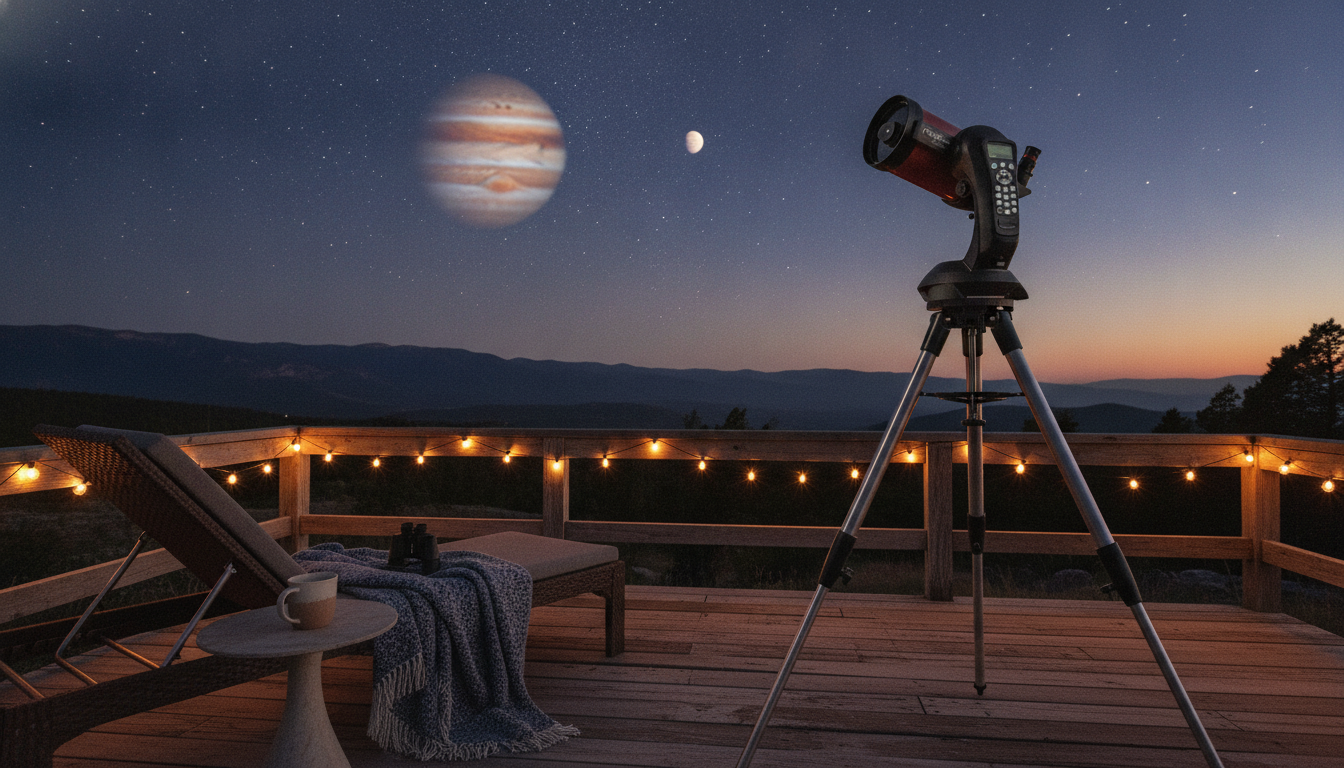
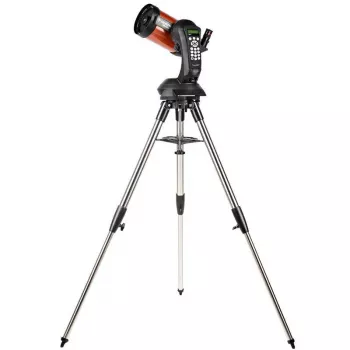
125mm F/10 Schmidt-Cassegrain Computerized GoTo Telescope with StarBright XLT: Compact Reach with Confident Tracking
A 125mm Schmidt-Cassegrain with computerized GoTo is built for observers who want compact portability without giving up reach on the Moon, planets, double stars, and brighter deep-sky targets. The 125mm F/10 design naturally favors higher magnifications with everyday eyepieces, while StarBright XLT coatings aim to preserve as much light and contrast as practical in a small, travel-friendly optical tube. Pair that with GoTo object location and tracking, and you get a system that can turn short backyard sessions into productive observing—especially when streetlights or limited time make manual star-hopping harder.
What This Telescope Is Designed to Do
- Deliver high-magnification views in a compact tube: The F/10 focal ratio supports comfortable lunar and planetary observing with common eyepiece focal lengths, without needing extremely short eyepieces for “high power.”
- Make finding objects easier: Computerized GoTo can locate targets that are difficult to hunt down in light pollution, or when you only have a quick window to observe.
- Support a wide range of targets: It’s strongest on the Moon and planets, and capable on bright globular clusters, nebulae, and galaxies when sky conditions cooperate.
- Stay travel-friendly: Schmidt-Cassegrain tubes are short for their focal length, making transport and storage simpler than long-tube refractors.
Optics and Coatings: 125mm Schmidt-Cassegrain + StarBright XLT
A Schmidt-Cassegrain telescope (SCT) uses a corrector plate and a folded light path between mirrors, letting a long effective focal length fit into a short, sturdy tube. That’s a big reason SCTs are popular for grab-and-go setups that still feel “serious” on the planets.
StarBright XLT coatings are designed to improve overall light transmission through the optical system. In practice, that can help preserve contrast on subtle lunar and planetary detail, and slightly improve the “pop” of brighter deep-sky objects—especially when combined with good focus, stable seeing, and proper cooldown. For background on telescope designs and selection basics, Sky & Telescope’s equipment resources are a helpful reference: https://skyandtelescope.org/astronomy-resources/equipment-reviews/.
Best-use strengths include crisp lunar features along the terminator, Saturn’s ring structure under steady air, Jupiter’s main cloud belts, and tight double stars when collimation and seeing are on your side. Real-world limits still apply: 125mm of aperture sets a ceiling on faint-object reach, and transparency, light pollution, and dark adaptation often matter as much as the optics themselves. Beginner-friendly observing tips from NASA can improve what you see from any scope: https://science.nasa.gov/skywatching/.
Computerized GoTo and Tracking: What to Expect in Practice
GoTo is at its best when alignment is treated like part of the observing skillset, not a one-time hurdle. Accurate time/location entry, the correct time zone and daylight savings settings, and a stable tripod position can dramatically improve pointing accuracy.
- Alignment rewards care: Choose bright, well-separated stars and center them precisely (a high-power eyepiece helps for final centering).
- Tracking makes high power easier: When the telescope keeps an object centered, you spend more time observing and less time nudging—especially helpful when sharing views.
- There’s a short learning curve: Early sessions are about building a repeatable routine: leveling, alignment, careful focus, and small refinements.
- Plan power ahead: Computerized mounts are happiest with reliable power. Weak batteries can cause slewing errors, random resets, or inconsistent tracking.
If you want the manufacturer’s overview of the coating technology, Celestron’s official site is the best starting point: https://www.celestron.com/.
Performance Snapshot and Typical Targets
With a 125mm F/10 GoTo SCT, the most consistent “wow” moments usually come from high-contrast targets and bright showpieces—especially when seeing and transparency are favorable.
| Category | Strengths | Notes for Best Results |
|---|---|---|
| Moon | Sharp relief and high contrast | Use a neutral density or polarizing filter if glare is strong; observe near first/last quarter for best shadows |
| Planets | Comfortable high magnification, steady tracking | Allow cooldown time; collimate if needed; use quality eyepieces for crisp detail |
| Deep-sky (bright objects) | GoTo helps find targets quickly | Dark adaptation and darker skies make the biggest difference |
| Double stars | Good at high-power splits | Pick nights with steady seeing; keep optics aligned |
| Beginner friendliness | GoTo reduces frustration locating objects | Spend time mastering alignment and power management |
Target highlights
Setup Routine That Improves GoTo Accuracy
Accessories That Pair Well with a 125mm F/10 SCT
Featured In-Stock Picks
- 125mm F10 Schmidt-Cassegrain Computerized GoTo Astronomical Telescope with StarBright XLT — a compact, high-magnification-friendly SCT platform with automated object location and tracking.
- Living Room Outdoor Family Shelter Tent — a practical add-on for longer backyard sessions or star-party nights when wind, bugs, or light drizzle threaten comfort.
Who This Telescope Fits Best
FAQ
Is a 125mm Schmidt-Cassegrain good for beginners?
Yes, the optical design is approachable and delivers rewarding Moon and planet views early on. The computerized GoTo mount adds a learning curve, but consistent alignment practice, reliable power, and starting with bright targets make the first weeks much smoother.
How long should the telescope cool down before high-magnification viewing?
A practical range is about 20–60 minutes depending on the temperature difference between indoors and outdoors. Larger swings often need more time; a quick check is whether a bright star snaps cleanly into focus without shimmering, bloated edges.
Can this telescope be used for astrophotography?
It can work well for casual Moon and planet imaging, where short exposures and video stacking are common. Long-exposure deep-sky imaging is more demanding because tracking accuracy, focal length, and mount capability become critical for sharp results.













Leave a comment