Confident Kids Bundle: Emotional Strength for Ages 3–5
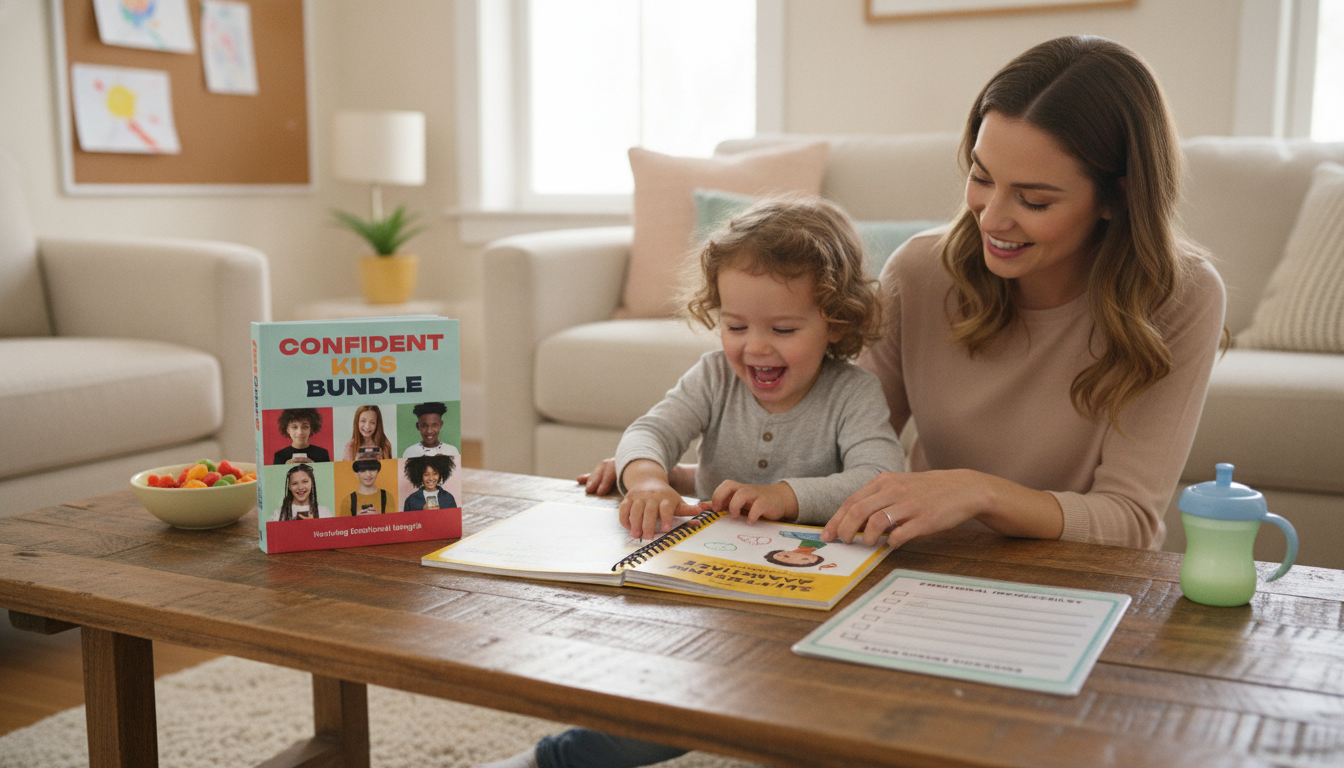
Confident Kids Bundle: Nurturing Emotional Strength for Ages 3–5
Early childhood is full of big feelings in small bodies. Between new routines, social learning, and rapid development, ages 3–5 can bring frequent meltdowns, confidence dips, and “I can’t” moments. A simple, repeatable approach—built around naming emotions, practicing coping skills, and noticing effort—helps children feel safer inside their own experiences. The Confident Kids Bundle: Nurturing Emotional Strength brings these building blocks together in one 3-in-1 set designed for everyday parenting: a practical guide, self-esteem activities for preschoolers, and an emotional intelligence checklist to keep progress visible and consistent.
What emotional strength looks like in preschool years
Emotional strength at ages 3–5 isn’t about never melting down—it’s about gradually building skills to move through upset with increasing safety, flexibility, and confidence.
- Recognizing feelings: children begin to label basic emotions (happy, sad, mad, scared) and connect them to body signals (tight tummy, hot face, fast heart).
- Recovering after upsets: calming with support, returning to play, and trying again after a mistake.
- Healthy confidence: willingness to attempt new tasks, tolerate frustration, and accept help without shame.
- Early empathy: noticing how others feel and practicing simple repair (“Are you okay?” / “I’m sorry”).
- Predictable support: children feel steadier when adults respond consistently—firm boundaries with calm reassurance.
These skills line up with what pediatric and child-development experts emphasize: kids learn self-regulation through repeated co-regulation with caring adults and predictable routines. Helpful references include the CDC’s positive parenting tips for preschoolers and the Harvard Center on the Developing Child overview of self-regulation and executive function.
What’s included in the Confident Kids Bundle
The bundle is built for real homes and real schedules—short practices, repeatable language, and a simple way to keep progress visible even when life gets busy.
- A parenting guide focused on building emotional strength through daily language, routines, and responses that reduce power struggles and increase cooperation.
- Self-esteem activities (ages 3–5) that emphasize effort, practice, and self-talk over perfection.
- An emotional intelligence checklist to track skills over time—helpful for staying consistent across caregivers and spotting what needs more practice.
Bundle components at a glance
| Component | Best for | How it helps at home |
|---|---|---|
| Parenting Guide | Caregiver strategies and scripts | Gives predictable responses for tantrums, fears, sibling conflict, and transitions |
| Self-Esteem Activities (Ages 3–5) | Short, playful practice | Builds confidence through mastery moments, praise that works, and brave trying |
| Emotional Intelligence Checklist | Simple progress tracking | Highlights growing skills (labeling feelings, calming, repair) and what to repeat next week |
Daily routines that grow confidence and emotional intelligence
Preschoolers thrive when the same few supportive moves show up again and again. Think “small, steady reps,” not big lectures.
- Morning preview talk: name what’s coming next (“First breakfast, then shoes, then the park”) to reduce anxiety and resistance.
- Two-choice boundaries: offer limited choices that both work (“Red shirt or blue shirt?”) to support autonomy without losing structure.
- Feelings + limits script: validate the emotion, hold the boundary (“You’re mad. Hitting hurts. Hands stay gentle.”).
- Confidence language: praise process (“You kept trying”) rather than traits (“You’re so smart”) to strengthen persistence.
- Repair ritual: after conflict, guide a small reconnection step—helping fix, offering comfort, or practicing a better phrase.
When kids are stressed, simple steps work best. The American Academy of Pediatrics guidance on helping children handle stress reinforces the value of calm adult support, routines, and coping practice.
Self-esteem activities that fit real-life attention spans (3–5)
At this age, confidence grows from tiny moments of “I did it” and “I can try again.” Keep activities short, playful, and easy to repeat.
- “Brave try” ladder: pick one small challenge (new food bite, greeting a peer) and celebrate the attempt, not the result.
- Emotion charades: act out feelings and guess them; connect each feeling to a calming option (breathe, hug, water break).
- Mistake-friendly play: intentionally make a small error in a puzzle or drawing and model calm recovery (“Oops—try again”).
- Kindness missions: one tiny prosocial task daily (hand a napkin, pick up a toy) to build belonging and self-worth.
- Confidence jar: add a note or sticker for effort moments; review weekly to reinforce a child’s internal story of capability.
To make these practices easier to stick with, set up one “calm + connection” spot at home—somewhere you can read, breathe, or reset together. A supportive seat like the Nordic Rattan Leisure Single Sofa Chair can turn a corner into a cozy routine space for emotion books, quiet sensory breaks, or a quick post-tantrum reconnect.
Using the emotional intelligence checklist without pressure
Who this bundle helps most (and when to add extra support)
Getting started in one week
If you want an all-in-one set you can reuse through multiple phases of preschool development, start with the Confident Kids Bundle and keep it somewhere you can grab quickly—near the kitchen, play area, or your calm-down corner.
FAQ
Is this bundle appropriate for both 3-year-olds and 5-year-olds?
Yes—it’s designed for ages 3–5. For younger children, use fewer words and more play (modeling, pictures, simple choices); for older preschoolers, add small independence challenges like leading the calming step or practicing repair phrases with less prompting.
How quickly can improvements in tantrums and confidence show up?
Many families notice early shifts within a few weeks, especially when coping tools are practiced while calm and caregiver responses stay consistent. The biggest changes usually show up gradually as skills repeat across routines, transitions, and social moments.
What if a child refuses to talk about feelings?
That’s common at this age—use low-pressure options like modeling your own feelings, labeling emotions during play, reading storybooks, or trying emotion charades. You can also focus on body cues (“tight tummy,” “fast heart”) and offer choices for calming without requiring a long talk.
















Leave a comment