Smokeless Korean BBQ + Hot Pot Grill for Apartments
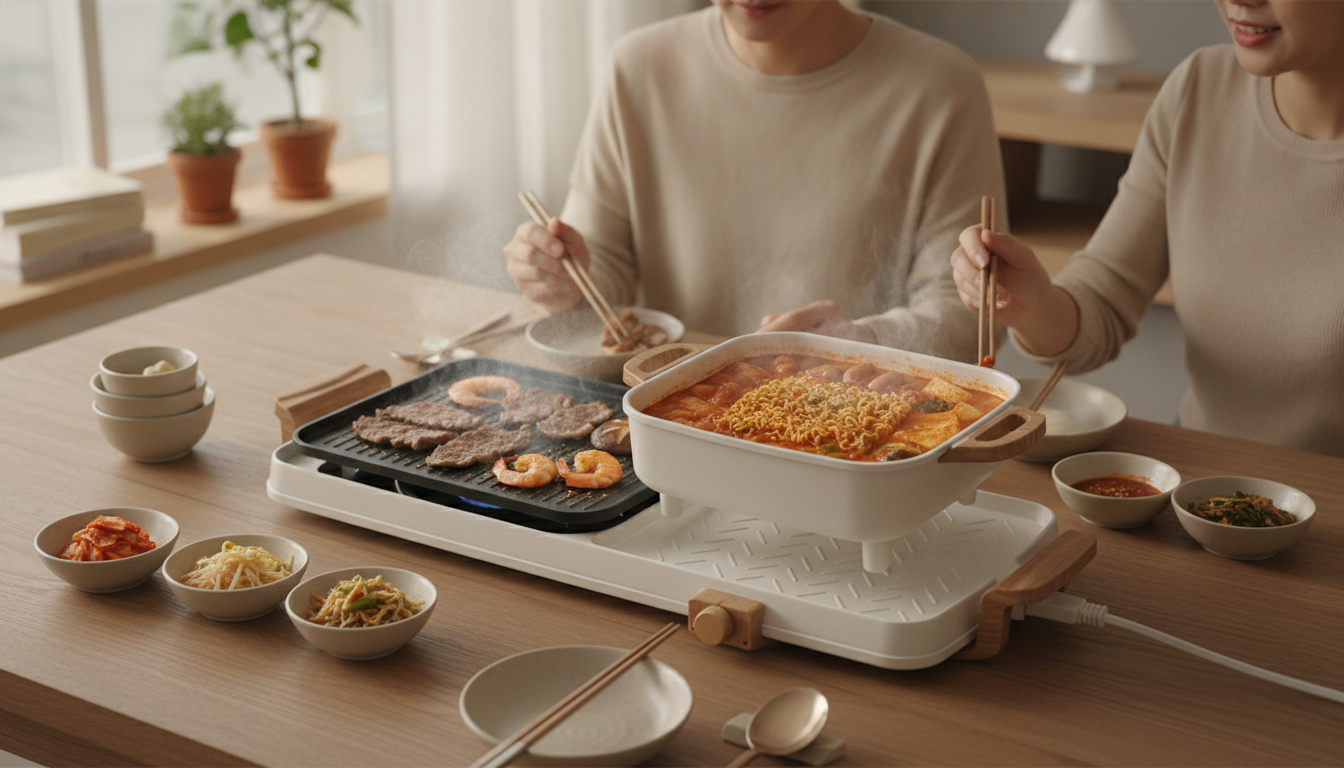
Multi-Functional Indoor Korean Hot Pot and Barbecue Grill – Electric Smokeless Cooking Pan
A combined hot pot and tabletop barbecue makes it easier to host Korean-style meals at home—especially in apartments and small kitchens where smoke, splatter, and cleanup can be deal-breakers. This multi-functional electric cooking pan is designed for shared dining, letting one side simmer broth while the other sears meats and vegetables with less lingering odor than traditional stovetop or charcoal setups.
What This Cooker Is Designed to Do
This style of tabletop cooker brings the “cook together” experience to your dining table without juggling multiple burners and pans. You can keep broth gently simmering while grilling right beside it, so dinner flows continuously instead of in stop-and-start batches.
- Bring hot pot and grill cooking to the dining table with one electric appliance.
- Support social, family-style meals: simmer broth while grilling proteins and vegetables side-by-side.
- Reduce common indoor pain points like heavy smoke, oil splatter, and constant pan swapping.
- Offer a convenient alternative to stovetop hot pot plus a separate grill pan—especially for weeknight meals or small gatherings.
If you’re shopping for the all-in-one setup, see the Multi-Functional Indoor Korean Hot Pot and Barbecue Grill – Electric Smokeless Cooking Pan.
Best-Use Scenarios (Apartment-Friendly Meals)
Tabletop electric cooking shines when you want restaurant-style variety without turning the whole kitchen into a cooking station. It also keeps everyone involved—guests can cook bite-by-bite, which helps reduce overcooked meat and soggy vegetables.
- Korean BBQ night: grill thin-sliced beef/pork, mushrooms, onion, zucchini, and serve with rice and lettuce wraps.
- Hot pot night: keep a mild broth going while guests cook sliced proteins, tofu, dumplings, and leafy greens.
- Two-course flow: start with a clear broth, then transition to grilling after ingredients are cooked.
- Quick meals: grill shrimp or chicken while heating soup, ramen, or tteokbokki-style broth on the hot pot side.
- Entertaining: keeps cooking at the table so the kitchen stays cleaner and guests stay involved.
For a comfortable hosting setup, pairing a cozy seating spot nearby—like the Nordic Rattan Leisure Single Sofa Chair – Solid Wood, Modern Fabric Design—can make longer meals (hot pot tends to be wonderfully unhurried) feel even more relaxed.
Cooking Modes and Food Ideas
Think of the grill side as your fast, high-heat station and the hot pot side as your steady, simmering backbone. A little prep goes a long way: blot proteins dry, portion ingredients in small plates, and keep sauces separate so the broth stays balanced.
- Grill side: best for thin cuts that sear quickly; pat proteins dry to improve browning and reduce splatter.
- Hot pot side: works well for broth-based meals; add aromatics early (garlic, scallion, ginger) for depth.
- Veg-friendly cooking: grill eggplant, peppers, corn, and asparagus while simmering mushrooms and bok choy in broth.
- Flavor pairing tips: keep dipping sauces separate (ssamjang, sesame oil + salt, ponzu-style sauce) to avoid over-salting the broth.
- Timing tip: start the hot pot first so broth is ready when the first round of grilled items comes off.
Mode guide for shared tabletop cooking
| Mode | Great for | Tips to keep cooking cleaner |
|---|---|---|
| Grill | Thin-sliced meats, seafood, firm vegetables | Use a light brush of oil; avoid sugary marinades until the end to limit sticking and smoke |
| Hot pot | Broths, dumplings, tofu, noodles, leafy greens | Skim foam early; keep a small strainer handy for bits to prevent overcooking |
| Combo meal | Cook-and-share dining for 2–6 people | Stagger batches: grill in rounds while the pot simmers continuously |
Smoke, Odor, and Indoor Comfort
“Smokeless” tabletop cooking is best understood as smoke-reduced cooking: you’ll usually see less visible smoke than stovetop searing or charcoal grilling, but results depend on heat, fat, marinades, and ventilation. For indoor air quality best practices, the U.S. EPA’s guidance on Indoor Air Quality is a helpful reference point.
If you’re setting up a dedicated “BBQ night” table, a statement light fixture such as the Elegant Art Deco-Inspired Crystal Branch Chandelier for Dining Room can help keep the whole experience focused around the table—where the cooking happens.
Cleaning and Care for Long-Lasting Nonstick Performance
Safety Notes for Tabletop Electric Cooking
Tabletop cooking is fun because it’s close-up, but that also means a bit more attention to cords, surfaces, and hot liquids. For general home guidance, the U.S. Consumer Product Safety Commission’s overview of electrical safety in the home is a solid baseline.
When grilling or simmering meats, cook to safe minimum internal temperatures; the USDA’s chart is a quick reference: Safe Minimum Internal Temperatures.
Who This Cooker Fits Best
For an easy starting point, the Multi-Functional Indoor Korean Hot Pot and Barbecue Grill – Electric Smokeless Cooking Pan is built around that dual-zone workflow—one steady simmer, one quick sear—so a full meal can happen without bouncing between stovetop burners.
FAQ
Does an indoor Korean BBQ and hot pot cooker really stay smokeless?
“Smokeless” usually means reduced smoke compared to stovetop searing or charcoal grilling, not zero smoke. Keeping heat moderate, using high-smoke-point oil, blotting marinades, and cooking leaner cuts with good ventilation all help minimize visible smoke and odor.
Can hot pot and grilling be used at the same time?
Yes—simultaneous simmering and grilling is the main advantage of this style of cooker. Start the broth first so it’s ready when the first grilled batch comes off, and grill in rounds while keeping dipping sauces separate so the broth doesn’t get over-salted.
What foods work best for tabletop grilling without making a mess?
Thin cuts, lean proteins, and firm vegetables are the easiest to manage. Pat ingredients dry, use a light oil brush, and save sugary marinades for the end to reduce sticking, splatter, and extra smoke.














Leave a comment