10-Min Anxiety Relief Routine: Mindfulness + Reframes
The Anxiety Relief Bundle: A Path to Calm — A 4-in-1 Routine for Mindfulness, Positive Thinking, and Daily Follow-Through
Calm often comes from small, repeatable steps rather than a single breakthrough. The Anxiety Relief Bundle is built around that reality: it groups practical tools into a simple system you can actually use on busy days, high-stress days, and low-energy days. Instead of asking you to “try harder,” it offers a clear rhythm—mindfulness to steady your body, realistic reframes to steady your thoughts, a printable checklist to steady your consistency, and a course-style outline to steady your direction.
What this bundle is designed to support
- Reduce mental overload by organizing practices into clear, bite-sized actions
- Build steadier coping skills through repetition rather than willpower
- Create a flexible routine that works on high-stress days and low-energy days
- Encourage a balanced mindset without forcing positivity or ignoring hard feelings
- Offer printable structure for people who do better with visual cues and checklists
What’s included in the 4-in-1 bundle
At its core, this is a “pick one, do it, track it” toolkit. Each component has a distinct job, so you’re not guessing what to do when anxiety ramps up.
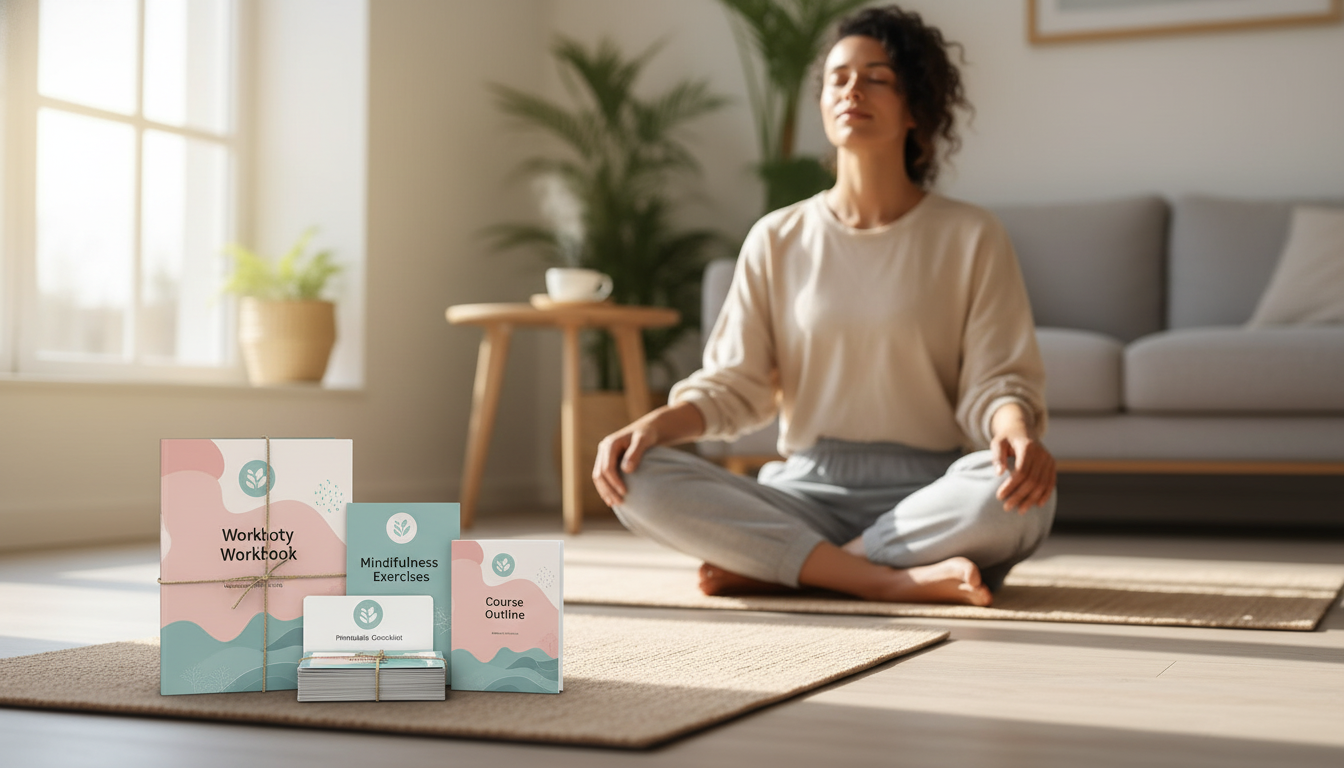
- Mindfulness exercises to ground attention in the present moment
- Positive thinking materials that guide reframes and supportive self-talk
- Printable checklist to track daily or weekly consistency
- Course outline that sequences the practices into a simple progression
Bundle components at a glance
| Component | Primary goal | How it’s typically used | Best for |
|---|---|---|---|
| Mindfulness exercises | Calm the nervous system and interrupt spirals | Short practices (2–10 minutes) during stress or as a daily habit | Racing thoughts, restlessness, difficulty focusing |
| Positive thinking prompts | Shift perspective and reduce catastrophizing | Journaling, reflection prompts, or quick reframes | Negative self-talk, worry loops, low confidence |
| Printable checklist | Make habits visible and easier to maintain | Daily check-off, weekly review, or a “minimum day” plan | Consistency challenges, forgetfulness, busy schedules |
| Course outline | Turn tools into a step-by-step plan | Follow the sequence over days/weeks; revisit modules as needed | People who prefer structure and a clear starting point |
If you want the complete set in one place, start here: The Anxiety Relief Bundle: A Path to Calm (4-in-1 bundle).
How to use the bundle as a simple 10-minute daily routine
This routine is intentionally short. Consistency tends to come from “easy to start,” not “perfectly done.”
- Minute 1–2: Choose a single intention for the day (steady breath, kinder self-talk, one next step)
- Minute 3–6: Do one mindfulness exercise (breathing, body scan, senses check-in, or brief grounding)
- Minute 7–9: Complete one positive-thinking prompt (name the fear, challenge the story, replace with a balanced thought)
- Minute 10: Mark the printable checklist and note one small win (even “showed up” counts)
- On harder days: use a “minimum version” (one breath cycle + one sentence reframe + check it off)
For extra credibility and context, major health organizations emphasize coping skills that include stress management, grounding, and practical routines—see the CDC’s guidance on coping with stress and the National Institute of Mental Health overview of anxiety disorders.
Mindfulness exercises that work well when anxiety spikes
When you’re activated, thinking your way out can feel impossible. Quick mindfulness exercises create a “pause” so your body can settle enough to choose your next step.
- 5-4-3-2-1 grounding: identify five things seen, four felt, three heard, two smelled, one tasted
- Box breathing: inhale 4, hold 4, exhale 4, hold 4 (adjust counts if needed)
- Body scan reset: move attention from forehead to jaw to shoulders to hands to belly, releasing tension
- Name-and-normalize: label sensations (“tight chest,” “busy mind”) without judging them
- Micro-pause practice: one slow exhale before responding to a message, decision, or worry trigger
Mindfulness doesn’t need to be long to be useful. The American Psychological Association notes mindfulness meditation is research-supported for stress reduction, and shorter practices can still help you interrupt runaway reactivity.
Positive thinking that stays realistic (not forced)
Positive thinking works best when it’s grounded in reality. The goal isn’t to “talk yourself out of feelings,” but to reduce the extra suffering that comes from extreme predictions and harsh self-judgment.
Printable checklist ideas that improve follow-through
Using the course outline to build skills in layers
Creating a calming practice space (optional but helpful)
If a dedicated seat helps you follow through, consider the Nordic Rattan Leisure Single Sofa Chair for a dedicated calm corner. If you prefer a quiet, screen-free reset outside, the Outdoor Family Shelter Tent for quiet, screen-free grounding time can create a simple, contained space for breathing and grounding.
Who it can help most (and when to seek extra support)
FAQ
How quickly can results show up with a daily routine like this?
Many people notice small shifts—like quicker recovery after stress, fewer spirals, or easier sleep wind-down—within days to a few weeks when the routine is consistent. Using a “minimum-day” option helps you keep momentum even when energy is low.
Do the exercises require prior meditation experience?
No. The practices are short, beginner-friendly, and structured, so you can start with grounding and breathwork and add prompts or the course sequence as the routine starts to feel familiar.
What if positive thinking makes anxiety feel worse?
Switch from forced positivity to balanced reframes: validate what you feel first, then choose a realistic statement that reduces extremes. Self-compassion language and evidence-based counterexamples tend to feel safer than “look on the bright side” thinking.














Leave a comment